

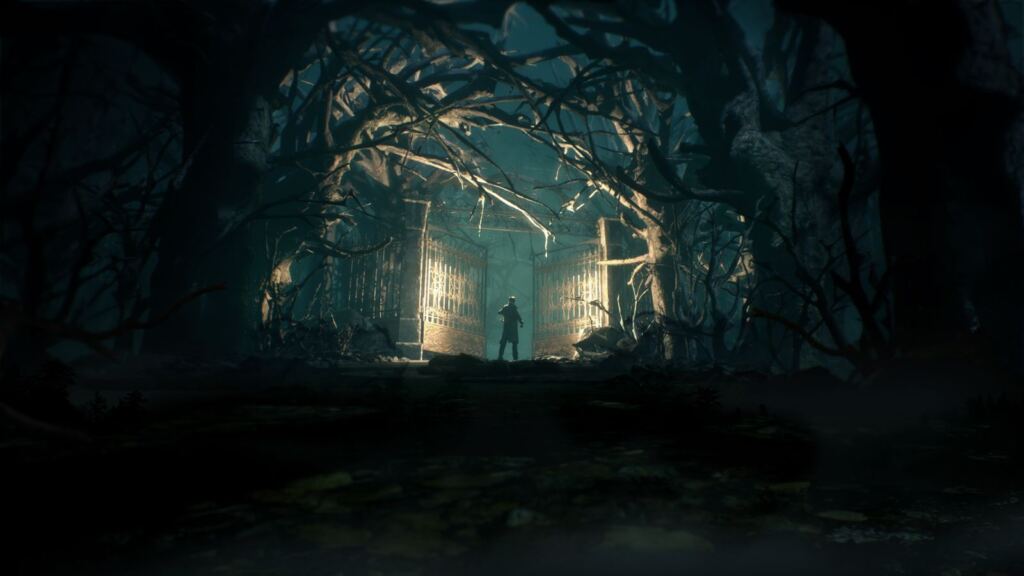
Reviewed on: PC
Review by Samuel Auras, born RPG player and Lovecraft fan
Anyone who enjoys the works of H.P. Lovecraft is living in a great era. The world created by the most famous horror writer in history is serving as the basis for series, films, board games and video games. Some of these merely draw inspiration from the feeling behind stories like At the Mountains of Madness and The Call of Cthulhu, but others really dive deep into the mythology. Eldritch Horror, for example, is an excellent board game featuring hundreds of characters, monsters, curses, items, stories and, of course, elder gods from other dimensions.
Call of Cthulhu, released by Focus Home Interactive (the same company that published games like Blood Bowl and The Surge), sits somewhere in the middle. It’s a game that sets out to explore the main and most famous story in H.P. Lovecraft‘s extensive catalog, which shares its name, and while it manages to bring the atmosphere, the references and some interesting characters, it falls short by leaving everything too superficial.
The story takes place in Darkwater, a fictional town on an island off the coast of the United States. The town is home to fishermen, and has a bar, a hospital, haunted houses and terrifying stories.
In Call of Cthulhu, the player steps into the shoes of Edward Pierce, a war veteran working as a private detective in the 1920s. With his career in danger, Edward accepts to investigate the death of a family that apparently died in an accidental fire. This serves as the hook that takes Edward to Darkwater, where the family lived. From there, the investigation leads to discoveries of occult things and much stranger events happening all over the island.
Edward Pierce in his office, waiting for a new case.The game is completely focused on narrative. The story is, overall, well written and detailed, and the player discovers clues and unravels mysteries organically, at their own pace. If you just follow the objectives the game gives you, the story will seem quite confusing, but investing a bit of time to read documents, rummage through drawers and talk to characters is rewarded with a very interesting story. The inspiration from Lovecraft’s short story of the same name, The Call of Cthulhu, is quite clear, and those who have read it will surely notice similarities, but the game’s story is original.
The game is primarily an investigation adventure. You need to talk to people, persuading them to reveal information and secrets. At other times, you’ll need to sneak into houses, find items, solve puzzles, and, here and there, run away and fight enemies. A very positive point is the great variety the game offers – you’ll rarely be doing exactly the same thing you did in the previous chapter. Also, of course, since it’s a game with a cosmic and psychological horror story, you can expect some really crazy sequences with heavily modified gameplay, simulating the madness the character starts to feel during the story.
An excellent detail of this game is that several situations presented to the player can be solved in different ways. Right at the start, Edward Pierce needs to infiltrate a warehouse to look for clues. The player can do this in different ways – convincing someone to help them get in, breaking down the door in secret, finding an alternative path… Each option requires a different type of skill – Investigation, Strength, Eloquence, etc. – that the player can choose to develop in the investigator. The character progression system serves primarily this purpose – you choose to invest your attribute points in certain skills, and, with that, unlock new dialogue possibilities, interactions with the scenery, etc. It’s a game where each player will have a different experience.
It’s not all roses. Even with all these choices, the story itself is quite linear; the player only chooses how to get from point A to point B. This takes away some of the fun of playing more than once, because even if you make different choices and discoveries, nothing truly new will happen. At least not until the end of the game – multiple endings are available, and whether the player can reach each of them depends on the choices made and how each challenge was approached.
In short: the game’s plot is good and fun, the paths are many, and we have a few endings available, so if you’re the kind of person who likes this type of story – an investigation with a foot in the supernatural and the macabre – you’ll definitely enjoy Call of Cthulhu’s narrative. It’s nothing spectacular that will change your life, but it’s pretty cool. In everything else, though, the game leaves a bit to be desired.
The game has a really cool mood, with the perfect setting for a horror story from the early 20th century. The graphic quality, however, holds the game back a bit in this regard, with low-detail textures, characters with weird expressions and very simple effects. The game also has few songs and sound effects, and the characters’ dialogue doesn’t have very convincing actors either. Nothing gets in the way too much, but you can tell it’s not a game with such a high budget and so much attention to detail.
Call of Cthulhu is a good game for fans of the genre and, especially, fans of Lovecraft’s work. Well set, with surprising moments and others a bit boring, the best thing is that it doesn’t drag on too long and ends at the right moment. All in all, a game with ups and downs, but one that will probably please its target audience.
Narrative: 8.0
Mechanics: 7.0
Audiovisual: 6.0
AVERAGE: 7.0
 Max Xavier
Comments (0)
Be the first to comment.