

Reviewed on: PS4
By Anderson do Patrocínio
Bloodstained: Ritual of the Night is a project as ambitious as it is passionate, becoming one of the most anticipated games of recent years and finally making its debut on current-generation consoles.
Made possible through crowdfunding, Bloodstained was promised as a return to the most traditional way of making a Metroidvania-style game, that is, a 2D adventure focused on exploration through the continuous acquisition of abilities. The title has been around since 2015, when it was announced, causing a mix of skepticism and devotion, since its mastermind is the legendary Koji Igarashi, responsible for nothing less than Symphony of the Night, the Castlevania that carries the legacy of being one of the most celebrated games of all time and considered unsurpassable among all Metroidvanias. And yes, it is impossible to review this game without comparing it with SotN, so expect many mentions of the PS1 classic; it is inevitable, but necessary and even fair to fans of the genre.
We reviewed the PS4 version and tell you what we thought.
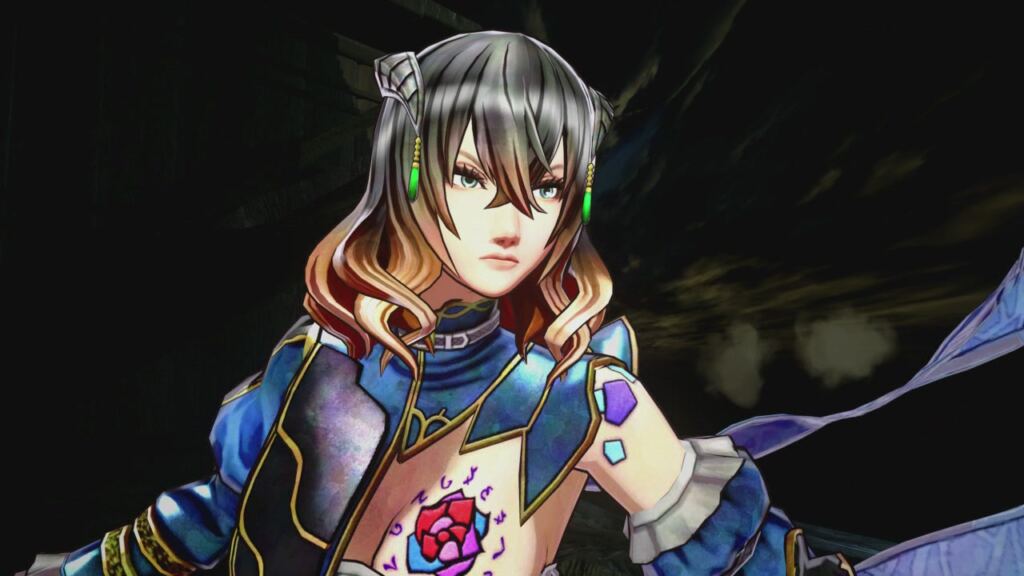
Bloodstained brings a story with elements common to the Castlevania series, involving spiritual matters and the classic fight of good against evil, not worrying much about innovating within that premise, but being competent enough to justify the characters’ motivations. The protagonist is Miriam, who since childhood has been involved with occult matters and who has crystals in her body, allowing her to use supernatural powers. In contrast to Miriam we have Gebel, her childhood friend who has similar powers but is involved in the appearance of a mysterious castle and therefore plays the role of antagonist. Since we’re not talking about a narrative-based game, the average tone of the story doesn’t bother, however, there are no great moments or really captivating characters either, which is a point to consider when we run into the inevitable comparison with Igarashi’s other games.
Right away it is worth mentioning the overall visuals, which have very beautiful direction in building the environments, which are quite varied and harmonious with each other. Some places are prettier and stand out for their finish, but in general the game is well leveled and extremely pleasing to the eye. The art direction bets on gothic tones, but with a color that makes it less somber than SotN.
In gameplay we have no great innovations, not least because there were years of refinement in earlier titles of the Castlevania series. Miriam can attack with an immense variety of weapons, in an arsenal that includes katanas, daggers, rapiers and even firearms, as well as delivering very powerful kicks. You explore gradually, as you acquire new equipment and abilities, interacting with some NPCs who give you side quests in turn, while slicing through hordes of monsters in labyrinthine environments. Here, the lack of more novelty becomes a positive, since the expectations of those who backed the project are precisely that it stay close to the classic genre, that is, without more recent design concerns such as procedural levels or permadeath. Everything works basically as a mix of SotN and Order of Ecclesia, where killing enemies lets you level up and collect crystals that give certain attack or exploration advantages.
Regarding the soundtrack, we have masterful work from Michiru Yamane and Ippo Yamada. Clearly inspired by SotN, the compositions recall familiarities that are planted in the subconscious of the series’ fans, matching perfectly with already consecrated environments such as the library, the gardens or the cathedral. Everything is stuffed with this comfortable familiarity and certain compositions draw sighs and smiles from the first chords, as their mirrored versions did in SotN more than twenty years ago.
However, not everything is roses and the game has its design and technical faults. Starting with the bosses, many of which are unexpressive and are not well integrated with the plot. Yes, I already said here that it isn’t a narrative-based game, however, it is desirable for a boss to have a different motivation from ordinary enemies and be integrated into the game’s lore, but many of them in Bloodstained are just a stronger enemy and defeating them brings the player a feeling of indifference, not of accomplishment.
Beyond these issues, there are performance problems with the frame rate, with slowdown at certain moments becoming bothersome; furthermore, the game eventually hitches slightly when you attack, leaving you apprehensive about the possibility of something going very wrong (you losing progress or the like).
Despite its problems, I understand it is an exemplary game in delivering what it promised and faithfully replicating an experience already delimited from conception. The fifteen hours that make up the full exploration of Bloodstained: Ritual of the Night are extremely satisfying. This game is like a love letter written to all Castlevania fans, who waited two decades to play a legitimate heir to the franchise on a home console.
It is very hard to put into words some sensations that border on intimacy, but the feeling of playing a Metroidvania conceived by Koji Igarashi is one of the most unique things for a video game fan; it is a sensory experience that cannot be easily replicated. For the work as a whole, Bloodstained joins Super Metroid, SotN and Hollow Knight to complete the four best games in the genre.
 Max Xavier


Comments (0)
Be the first to comment.