

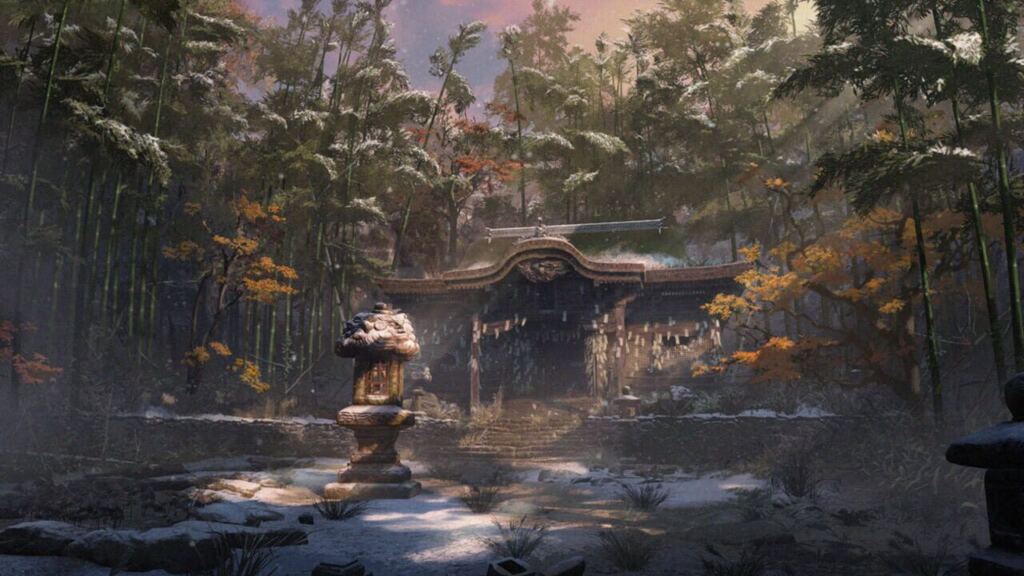
The facts: in an interview with the Japanese site Game Watch, published at the end of January 2019, Hidetaka Miyazaki, president of FromSoftware and director of Sekiro: Shadows Die Twice, confirmed that the game would have different endings and that they would be more rooted in the story than ever. He did not explain what that meant in practice, but the natural reading was that decisions made throughout the campaign would define the outcome.
In the same conversation, Miyazaki said Sekiro would have elements to encourage new playthroughs and challenges that would make each repetition harder, a tradition of the studio’s games since Demon’s Souls and Dark Souls.

Translating the jargon: unlike Dark Souls, Sekiro had a fixed protagonist, the shinobi known as Wolf, and a more direct story, set in a reimagined Sengoku-period Japan. This opened room for clearer narrative choices than in the fragmented stories of the Souls games. The game also swapped character building for a combat system based on posture and well-timed defense, with a prosthetic arm that worked as both tool and weapon.
What came next
Sekiro came out on March 22, 2019 on PS4, Xbox One and PC, published by Activision outside Japan. The promise was confirmed with four endings: Shura, Immortal Severance, Purification and Return, each tied to specific choices and paths. Scores ranged between 88 and 91 on Metacritic, and the game won Game of the Year at The Game Awards 2019. The numbers: more than 2 million copies in ten days, 5 million in July 2020 and more than 10 million in September 2023. On October 31, 2020, a free update brought new visual options and a mode to face the bosses in sequence.
Where to buy
Source: Game Watch, via Eurogamer.
 Doutor Overclock

 Sapo
 Max Xavier
Comments (0)
Be the first to comment.